Successful Piloting and Arduino Workshops Confirm the Educational Impact of CODEDU
The CODEDU project has successfully completed its piloting phase, including the implementation of structured Arduino workshops and the testing of the gamified e-Learning platform in real educational environments across partner countries.
A key component of this phase was the organisation of online Arduino workshops, designed to provide teachers and students with hands-on exposure to coding principles, circuit design and robotics logic. Due to high interest and the need for extensive feedback, two workshop sessions were organised, ensuring broad participation and meaningful engagement from schools.
During the workshops, participants were guided through practical demonstrations of Arduino applications, including circuit connections, sensor integration and rule-based logic configuration. Educators had the opportunity to observe how theoretical programming concepts can be transformed into tangible classroom activities. Students interacted with both physical Arduino kits (where available) and the virtual Arduino simulator integrated into the CODEDU platform.
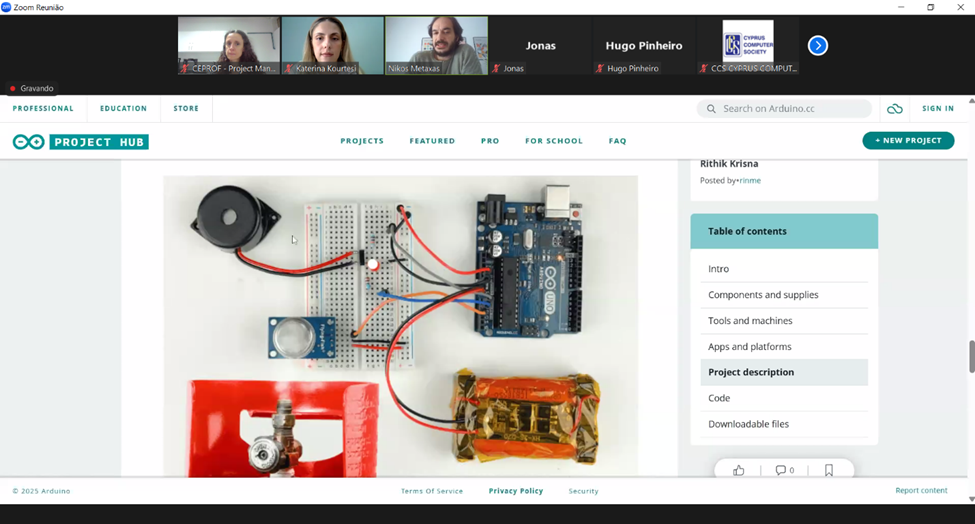
A distinctive feature of the CODEDU approach is the use of a rule-based logic system supported by an AI digital assistant. During the workshops, this innovative methodology was presented as a way to lower technical barriers for beginners while still promoting algorithmic thinking and problem-solving skills. Teachers highlighted that this approach makes robotics education more inclusive and adaptable to different levels of prior knowledge.
The workshops also provided space for discussion, peer exchange and collaborative reflection. Participants shared classroom challenges, implementation ideas and suggestions for improving usability. Structured evaluation tools were used to collect feedback, confirming high levels of satisfaction regarding clarity of instruction, practical applicability and motivational impact on students.
In parallel with the workshops, the piloting phase involved structured testing of the training curriculum, Student Toolkit and gamified platform. Teachers implemented selected modules in their classrooms, while students explored the simulator and interactive learning materials. The feedback collected allowed the partnership to refine and optimise the platform before its final release.