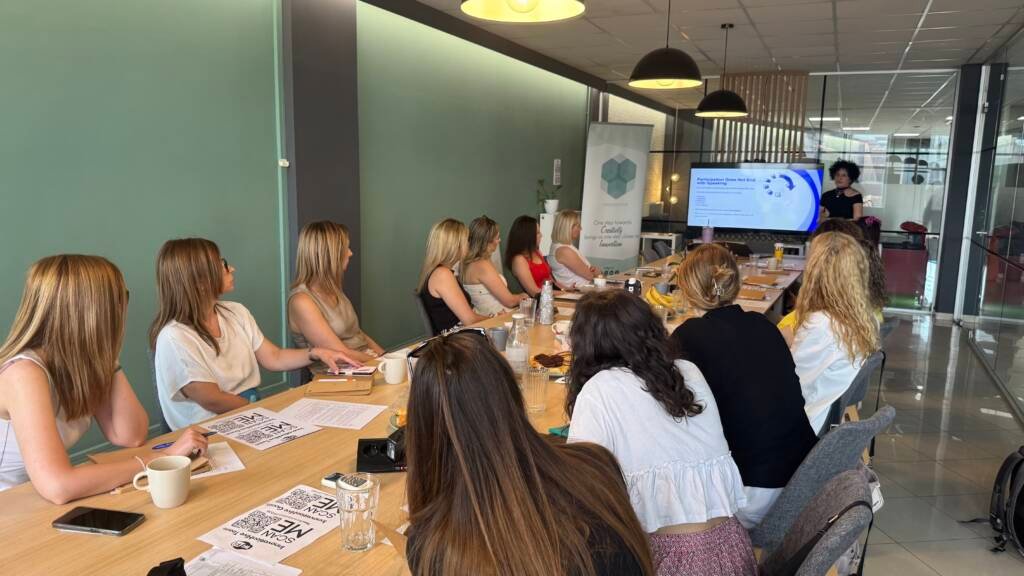
On 16 June 2026, the SOCRATES project partners came together in Larissa, Greece, for a full-day training session dedicated to one of the most important aspects of children’s participation: the people who help make it possible.
Hosted by Innovation Hive, the Facilitators’ Training brought together participants from the project consortium to explore how the Socrates Compass Mechanism (SCM) can be put into practice with children aged 6–12. The training marked an important step in preparing for the project’s pilot activities, where children will have opportunities to identify issues affecting their communities, explore possible solutions and communicate their ideas to decision-makers.
What Does It Take to Be a Good Facilitator?
Helping children participate meaningfully involves much more than organising activities or encouraging them to speak. Facilitators need to create environments where children feel comfortable sharing their views, where quieter participants are given space and where different opinions can be expressed without fear of judgement.
These questions were central to the training. Through interactive discussions, participants explored the responsibilities of facilitators, including active listening, managing group dynamics, adapting activities to different ages and abilities, and ensuring that children’s participation remains safe, inclusive and voluntary.
Child safeguarding and ethical participation were also addressed, with particular attention given to emotional safety, informed consent and supporting children with fewer opportunities.
During one interactive exercise, participants were asked what makes a good facilitator. Being a good listener emerged as the most frequently mentioned quality, alongside attentiveness, patience, empathy and the ability to give children space and time to express themselves.
The discussions also explored the opposite: what would an ineffective facilitator look like? Participants described someone who dominates conversations, imposes their own ideas, dismisses children’s concerns or focuses more on completing activities than on how children experience them. The exercise reinforced an important principle of the SCM: the facilitator’s role is to guide the process, not determine its outcome.
From Understanding the Compass to Putting It into Practice
A key part of the day focused on exploring the four phases of the Socrates Compass Mechanism: Notice, Explore, Speak and Weigh. Participants examined how the methodology supports children in moving from identifying a concern to investigating it, developing proposals, communicating with decision-makers and reflecting on the feedback they receive. They were also introduced to sample activities from the SCM Toolkit, discussing how different tools could be adapted to the age, abilities and needs of each group.
The afternoon was dedicated to a practical implementation workshop, where facilitators experienced elements of the Compass themselves. By working through sample activities and role-playing different situations, participants could consider the challenges that might arise during the pilot activities and explore ways to respond.
One particularly important topic was communication between children and adults in positions of authority. How can facilitators help children prepare to present their ideas to local authorities? What happens when an adult dominates the discussion? How should a facilitator respond when a child asks a difficult question? Rather than offering one-size-fits-all answers, the training encouraged participants to reflect on different scenarios and consider how to balance children’s independence with the need for appropriate support.
Building Confidence Ahead of the Pilots
The training concluded with a discussion on the upcoming pilot activities, including practical arrangements, documentation requirements and possible challenges during implementation. Participants also reflected on their experience and shared feedback through an interactive evaluation. The responses were encouraging. On a five-point scale, participants rated their improved understanding of the SCM methodology at an average of 4.7 out of 5, while the relevance of the training to their roles received an average score of 4.5 out of 5. Participants also highlighted the practical exercises as particularly useful, especially the role-playing activities, opportunities to explore negotiations with decision-makers and guidance on preparing children for interactions with local authorities. When asked to describe what they were taking away from the training, their responses included confidence, clarity, knowledge and inspiration. These reflections also highlighted areas where further preparation would be valuable, particularly around facilitating the Speak and Weigh phases and supporting children when communicating with authorities.
The Next Step: Bringing the Compass into the Classroom and Community
With the training completed, the SOCRATES partners moved closer to implementing the Compass with children in real educational and community settings. The upcoming pilot activities will provide an opportunity to test the methodology, observe how children respond to its different phases and gather insights that can help refine the tools. For the facilitators, the training offered an opportunity not only to become familiar with the methodology but also to consider their own role in making children’s participation meaningful.
Because creating space for children’s voices is not simply about encouraging them to speak. It is also about knowing when to listen, when to support and when to let children lead.